
Ubisoft has published PC system requirements for Rayman Legends Retold, and the entry-level bar is lower than the graphics overhaul might suggest. The Rayman Legends Retold requirements call for a GeForce GTX 1660, Radeon RX 5500 XT or Arc A580 paired with a Core i3-8100 or Ryzen 3100 to hit 1080p at 60fps, provided graphics are set to the low preset and the upscaler is set to Quality mode.
On GPUs that support it the game defaults to NVIDIA DLSS, with FSR and XeSS available on AMD and Intel hardware; Ubisoft hasn’t specified which versions of either upscaler ship in the game. General requirements ask for at least 8GB of RAM at minimum and 16GB across the recommended, 2K and 4K tiers, 33GB of storage, and Windows 10, though Windows 11 is mandatory for DLSS. Intel GPU owners also need Resizable BAR enabled to use Arc hardware at all.
Rayman Legends Retold requirements: minimum and recommended
The recommended tier is built around 1080p at 60fps with high settings enabled, rather than the low-preset compromise of the minimum spec. That calls for a Core i5-8400 or Ryzen 5 3600 alongside a GeForce RTX 3070, Radeon RX 5700 or Arc A750. Ubisoft hasn’t published a native-rendering configuration; every listed tier assumes upscaling is switched on.
- Minimum: Core i3-8100 or Ryzen 3100, GTX 1660, RX 5500 XT or Arc A580, low preset, Quality upscaling, 1080p60
- Recommended: Core i5-8400 or Ryzen 5 3600, RTX 3070, RX 5700 or Arc A750, high preset, 1080p60
For comparison, the original Rayman Legends is still sold on Steam and asks for far less: a Core 2 Duo E4400 or Athlon64 X2 3800+, 2GB of RAM and a GeForce 9600 GT or Radeon HD 3850. The remaster’s 33GB install is modest next to some other upcoming ports; Final Fantasy 7 Revelation will need about 200GB of storage by comparison.
What the low preset is actually asking the GPU to render
The requirements only make sense once you factor in what Quality-mode upscaling does to the actual render resolution. Tools like FSR3 and XeSS typically apply a 1.5x scale factor in Quality mode, meaning the GPU renders at a lower internal resolution before the upscaler reconstructs the 1080p output. At 1080p and 60Hz, the display itself moves 124 million pixels a second, by our arithmetic.
At a 1.5x scale factor, though, the GTX 1660 is only rendering close to 1280×720 internally, which works out to roughly 55 million pixels a second, well under half the native figure. That gap is most of the reason a five-plus-year-old midrange card can carry the 1080p60 label at all.
It’s the same pattern behind other recent low-spec announcements, including Fable’s stated support for entry-level 2020-era hardware: publishers are increasingly quoting upscaled output resolutions rather than native rendering loads, which lowers the stated hardware bar without necessarily lowering the workload much at higher settings.
What to watch
Rayman Legends Retold is due on PC and consoles on 3 December, according to Overclock3D. The blanket use of Quality-mode upscaling across every listed tier should also help handheld PCs, which can drop to Performance or Ultra Performance modes for better frame rates than the desktop-focused specs imply. Whether the game holds 1080p60 on the stated minimum spec once independent testing starts is worth checking against these numbers on launch day.
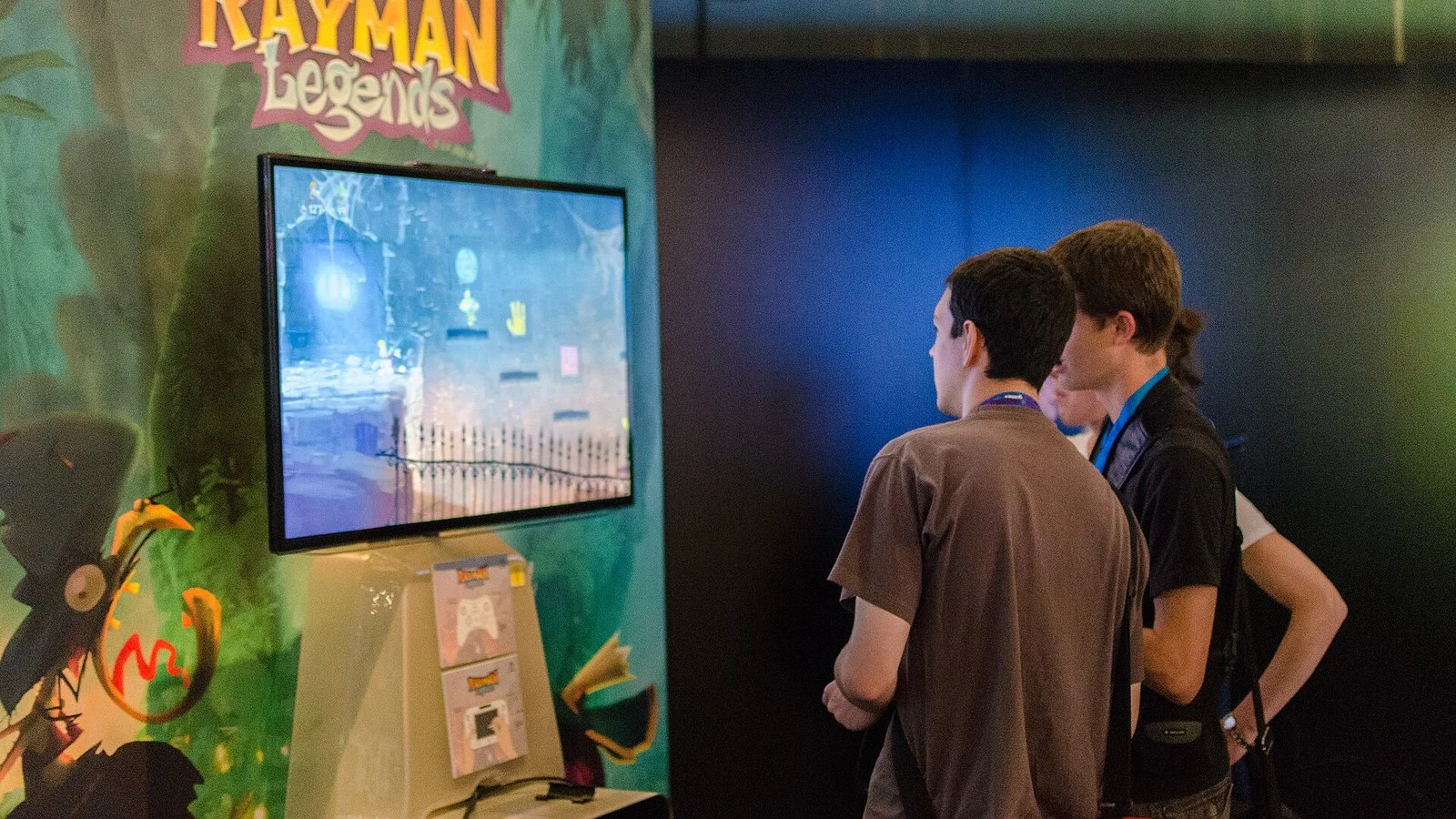
Image: Sergey Galyonkin from Raleigh, USA via Wikimedia Commons, licensed under CC BY-SA 2.0.