
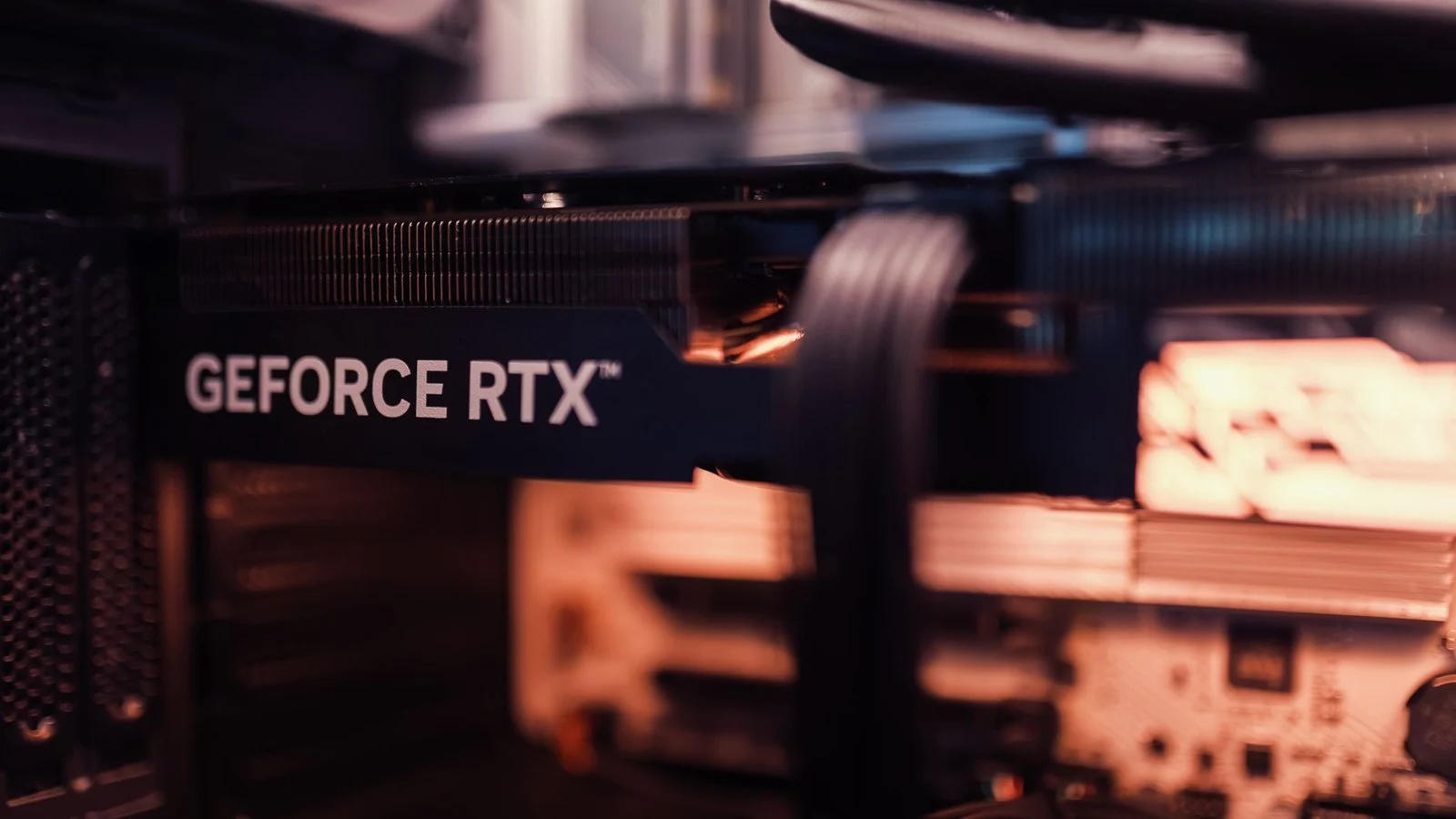
A leaked build of NVIDIA’s DLSS 5 model, packaged by modders into a drop-in Optiscaler injector, already runs well enough on NVIDIA’s flagship that testers have found a real bottleneck: the RTX 5090 power connector, not the GPU’s compute hardware, is what limits how much of the new neural rendering technique the card can actually run.
The model leaked alongside NBA2K27 and was modded into games within days using ReShade, before the community wrapped it into an Optiscaler package built around the leaked DLL, which makes adding DLSS 5 to most titles straightforward. NVIDIA has not shipped DLSS 5 officially yet. Its intended integration path is Streamline, the company’s own framework, which may carry less overhead than this community injection method.
Why the early numbers probably won’t move much
NVIDIA’s technical paper on DLSS 5 states that the model takes 8 ms to execute on a 4K frame. That figure lines up closely with what was measured running Optiscaler, which suggests the performance cost of the official Streamline version, once it ships, won’t differ dramatically from what modders are already seeing. Tom’s Hardware tested an RTX 5090 Founders Edition against an MSI RTX 5090 Lightning Z across Cyberpunk 2077, Hogwarts Legacy and Control, specifically to see how much of a hit NVIDIA’s largest GPU takes.
RTX 5090 power connector becomes the bottleneck
The Founders Edition, built around a single 12V-2×6 connector rated to a 575 W board power limit, dropped framerates by 42 to 49 percent with DLSS 5 running and consistently hit that power ceiling in the process. The Lightning Z, which uses two 12V-2×6 connectors and a 1000 W limit, took a smaller performance hit and held onto better 1% lows, but only by pulling far more power to do it.
- RTX 5090 Founders Edition: one 12V-2×6 connector, 575 W limit, 42-49% framerate drop with DLSS 5 on
- MSI RTX 5090 Lightning Z: two 12V-2×6 connectors, 1000 W limit, smaller drop, stronger 1% lows
That points to power delivery, not the GPU’s compute budget, as the limiting factor on single-connector RTX 5090 cards running DLSS 5 today.
Where the two write-ups disagree
The exact size of that power jump isn’t settled. TechPowerUp calculates a 50 percent rise in Hogwarts Legacy on the Lightning Z, from 480 W to 720 W with neural rendering active. Tom’s Hardware’s own figures point to a smaller increase, closer to 25 percent. Neither outlet is necessarily wrong, they’re likely drawn from different games or test runs, but it means DLSS 5’s actual power cost is still a moving target this early, and a single headline number from either piece shouldn’t be treated as the final word.
We covered NVIDIA’s last DLSS-related change in August, when a GeForce Game Ready driver patched a stutter bug in the existing DLSS pipeline. DLSS 5 is a different scale of change: an unreleased model that has already leaked, been reverse-engineered by modders, and pushed a flagship GPU to its stated power limit before NVIDIA has issued so much as a beta driver for it.
Worth watching is whether NVIDIA’s official Streamline integration narrows or widens that gap, and whether NVIDIA specifies a minimum power connector configuration for DLSS 5 when it ships officially, given how close the Founders Edition already runs to its 575 W ceiling.