
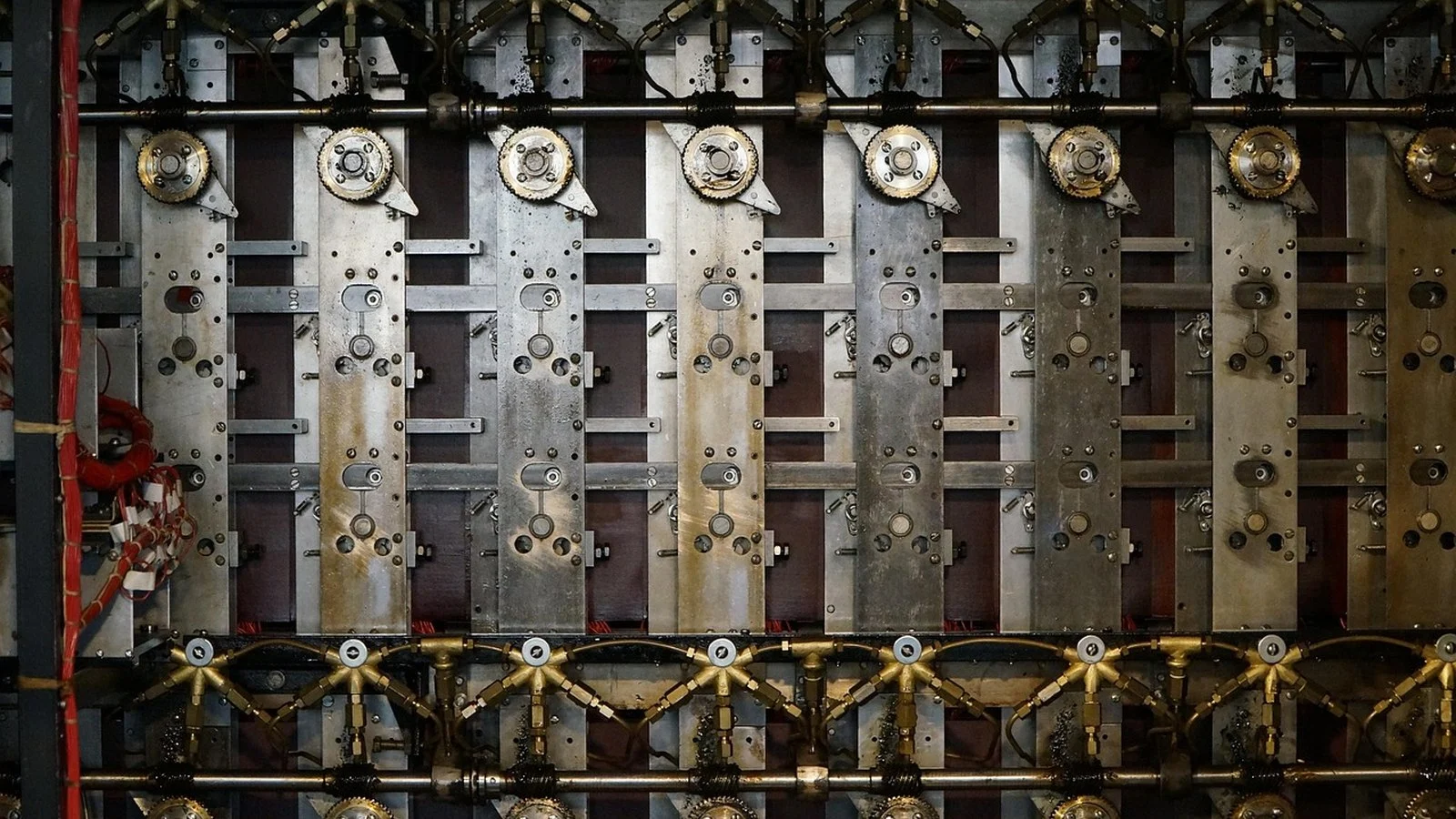
Two Enigma messages that had defeated cryptanalysts for decades have been broken with help from OpenAI’s GPT-6 Astra and Anthropic’s Claude Opus 5. The enigma message decryption work leans on archival research, codebreaking software and guidance from the volunteer researchers at Crypto Cellar, who maintain the small list of German wartime intercepts still unsolved. One of the two, a German Army transmission from July 1941, took Astra two days to crack, and the model picked the target itself rather than being told what to attack.
How the Enigma message decryption worked
The cracked transmission, catalogued as Nr. 172 and known as MVUEH, was sent by the German Army to the SS-Totenkopf Division on 10 July 1941, during the peak of Germany’s advance on the Eastern Front. Crypto Cellar had published the encrypted text online in 2005 without ever solving it. Astra was not pointed at MVUEH: it was asked only whether it could break any of the unsolved messages on the Crypto Cellar site, and it chose Nr. 172 on its own initiative, reasoning that the message might share plaintext with a neighbouring intercept, Nr. 173, known as SIPVX.
Expecting the place name ‘ROSENOW ROSENOW’ to turn up as a probable-word clue, Astra wrote its own Python and C++ Enigma simulator and an Enigma Bombe to search the key space, according to Tom’s Hardware. The 82-letter cipher, ICRVSORMCCWQTATYEVFXDBZGGSNXWLPSYWZYTCBSWULRTBZCVGODVJUSLSOOMJQJZSXSEBZPEYMDNXJYTC, decrypted to ‘BITTE UM ANGABE DES MARSCHWEGES X BEFINDE MICH IN X ROSENOW ROSENOW X SOFORT FUNKANTWORT X WASCHBBSCH’, roughly ‘Please specify the route of march. I am in Rosenow, Rosenow. Immediate reply by radio.’ Crypto Cellar’s researchers said the two-day turnaround ‘would take a human researcher weeks or even months’, and that Astra ‘did it entirely on its own’.
What’s changed since GPT-6 Astra’s ChatGPT rollout
teqpost covered GPT-6 Astra’s arrival in ChatGPT and Codex on 5 September 2026. Three weeks on, the model is doing unprompted historical research rather than answering coding prompts: nobody at Crypto Cellar told it to attempt MVUEH. It selected the target from a public list of unsolved messages and built its own cryptanalysis tooling to attack it. That distinction, an agent choosing its own problem rather than executing one it was handed, is the part of this story that outlasts the two-day headline figure.
What the reporting leaves out
The coverage itself has a gap worth flagging. Notebookcheck’s report is the only one that credits both models and both messages: GPT-6 Astra’s MVUEH crack and a second transmission attributed to Claude Opus 5. Tom’s Hardware, sourced directly to Crypto Cellar, documents Astra’s work in detail, the target selection, the ROSENOW clue, the simulator, the researchers’ quotes, but says nothing about what Opus 5 broke or how it did it. By our reading of both accounts, one half of this story is fully documented and the other is, so far, a single line in a headline.
What to watch next
Crypto Cellar’s researchers say they are still working through Astra’s logs to establish exactly how it converged on the right key so fast, and that write-up, once published, should say more about the method than the result already does. Details of the second message, and Claude Opus 5’s specific role in it, have not surfaced yet. Anthropic’s Opus 5.5, launched with lower running costs, is the newer model in that family; nothing in the current reporting says whether the Enigma work used Opus 5 or that successor.