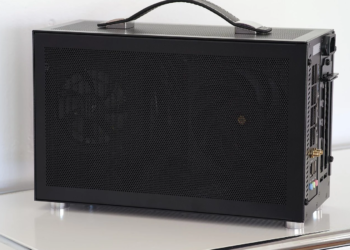

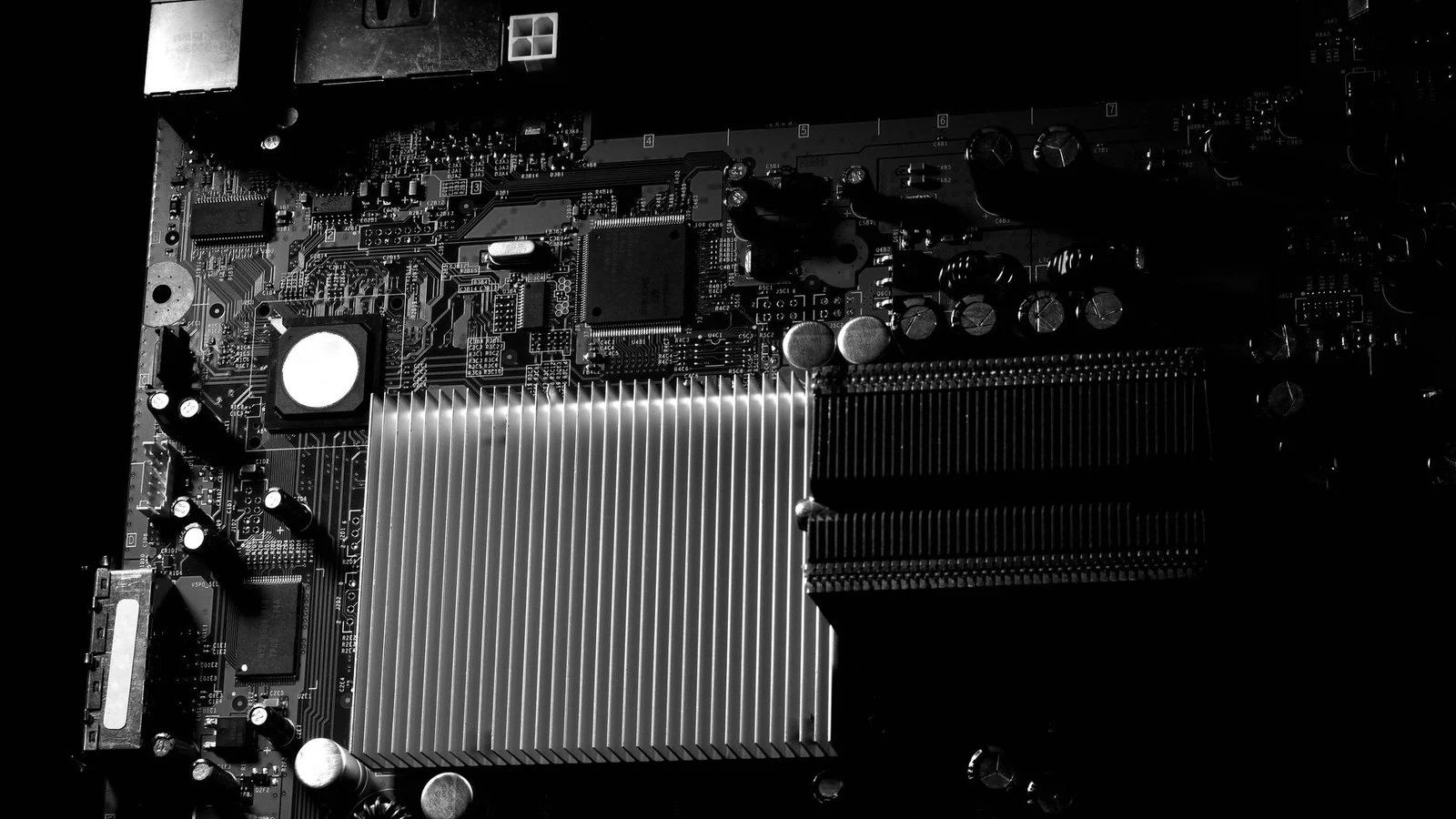
A community-maintained fork of AMD’s FSR 4 upscaler has nearly halved processing time on the BC-250 mining board, the repurposed PlayStation 5-derived silicon AMD originally sold to crypto miners. The board pairs a semi-custom PS5 GPU and CPU die AMD built for Sony with none of the console’s I/O, and hobbyists have spent the past year turning it into a capable Linux gaming machine by writing open drivers for hardware that was never meant to run outside a console.
Version 4.0.0-rc9 of the fork was published on 11 September. It moves the project’s optimisations out of a custom Mesa driver build and into a portable FidelityFX DLL, so the gains no longer require a modified graphics driver to run.
How the BC-250 mining board gets faster
The BC-250 runs on RDNA 2, an architecture that predates the low-precision integer math FSR 4 leans on for its machine-learning-based upscaling. Newer AMD GPUs handle those INT8 dot-product operations natively; on the BC-250 they have to run through a slower fallback path instead. Earlier work on this project rewrote that fallback in Mesa, replacing it with a route built around signed 24-bit integer operations rather than the more expensive default sequence. That change cut the instruction count of one representative shader from 64,269 to 37,613.
The new rc9 release carries the same underlying optimisation but repackages it as a portable FidelityFX DLL instead of a patch to the graphics driver. That matters because it removes the requirement to run a specially modified Mesa build just to get the speed-up, and it makes the optimisation portable to any setup running the BC-250 rather than one tied to a specific driver stack.
The benchmark numbers
According to testing shared by the developer and detailed by Tom’s Hardware, FSR 4.1.1 running at 2560×1440 with a 1706×960 Quality-mode input took 11.51 ms using the original shaders, against 5.92 ms with the new rc9 release. At 4K the same comparison fell from 25.72 ms to 12.08 ms, and at 1080p from 7.13 ms to 3.93 ms. The developer also reported that the optimised path produces byte-identical output to the original shaders under controlled testing, which means the gain comes from doing the same work more efficiently rather than from cutting image quality.
By our arithmetic, the step from 1080p to 1440p only increases the vertical resolution by 33.3%, yet on the optimised rc9 build the upscaling time rises by close to 51%, from 3.93 ms to 5.92 ms. FSR 4’s cost on this hardware does not scale in a straight line with pixel count, so the RDNA 2 silicon inside the BC-250 has a steeper climb at every step up in resolution than the resolution figures alone would suggest. It is a reminder that a board built from six-year-old graphics hardware is still fighting the architecture gap FSR 4 was designed around, even after the software-side work.
What to watch
The rc9 build is still a release candidate rather than a stable release, and the FidelityFX DLL packaging is new enough that broader compatibility testing beyond the BC-250 has not been reported. Worth watching is whether the same DLL approach gets carried to other AMD GPUs that lack native support for FSR 4’s integer workloads, extending the trick past this one repurposed mining board. The project sits in the same community-modding tradition that recently unlocked DLSS Multi Frame Generation on Nvidia’s RTX 40 cards, where enthusiasts route around vendor-imposed hardware limits rather than waiting for official support.