
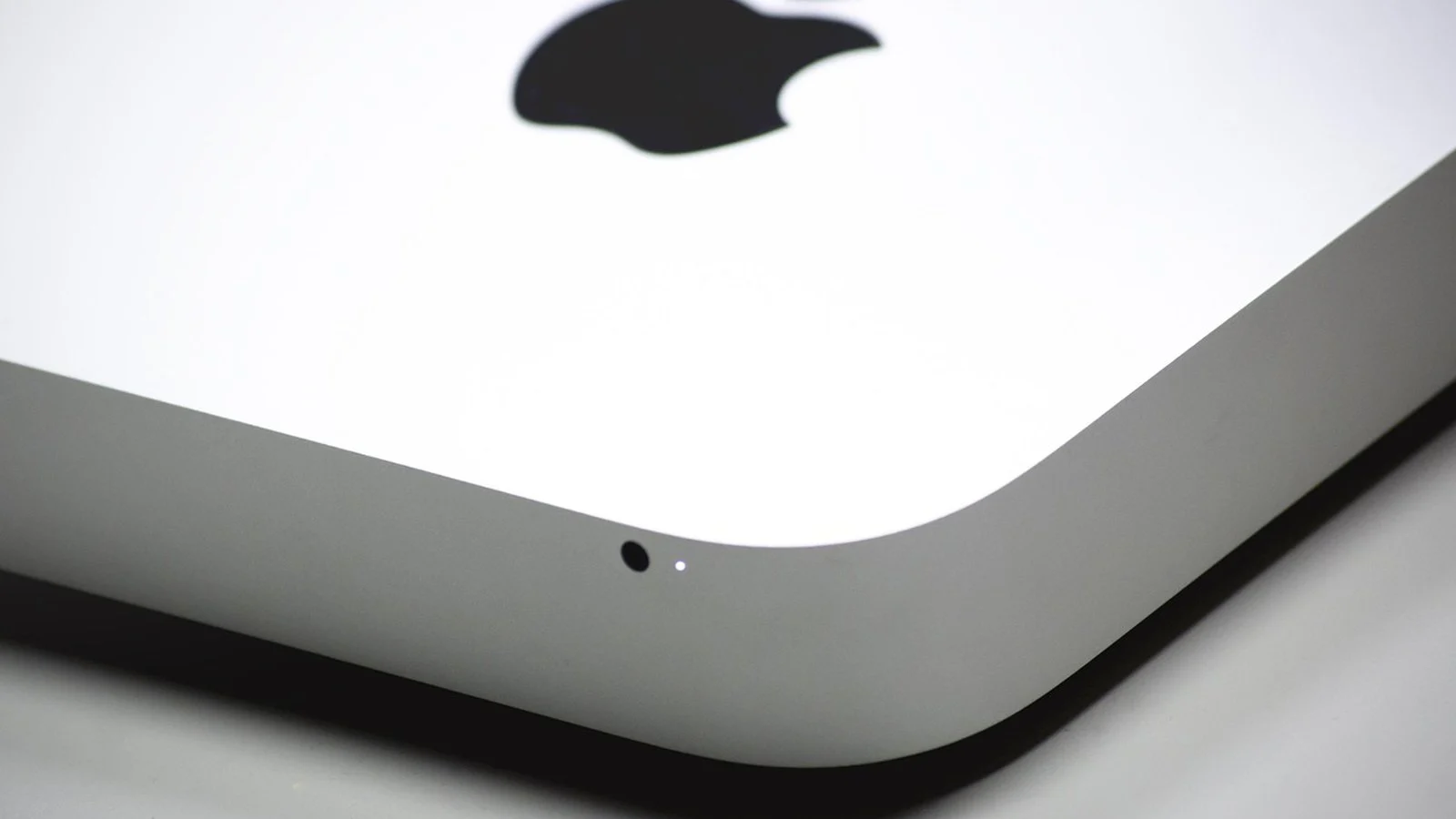
Apple has refreshed its two smallest desktops in one announcement: the Mac mini moves to a 2-nanometer M6 chip, and the Mac Studio M5 Ultra becomes the most powerful Mac Apple has ever sold. Both machines are up for pre-order now.
Mac mini M6: chip and price
The M6 is Apple’s first chip built on a 2-nanometer process. It packs a 12-core CPU split across two super cores, four performance cores and six efficiency cores, paired with a 12-core GPU carrying neural accelerators and a dual 16-core Neural Engine. The top configuration reaches 170GB/s of memory bandwidth.
Apple’s own figures claim up to four times the AI performance of the outgoing chip, double the storage and graphics speed, and 40 percent faster CPU work; those are the company’s numbers, not an independent benchmark. Buyers who want more headroom for video editing or game development can still step up to an M5 Pro configuration instead, and the mini now supports Wi-Fi 7 and up to 64GB of RAM.
None of it is cheap: the entry-level 16GB, 256GB model now starts at $899, a $200 rise on the outgoing generation, and moving to 1TB of storage adds a further $500 on top of that.
Mac Studio M5 Ultra: chips and memory
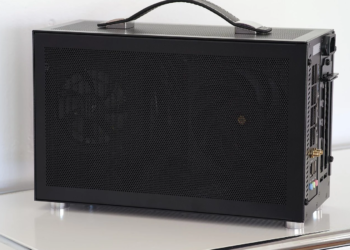
The Mac Studio moves onto M5 Max and the new M5 Ultra, replacing the outgoing M3 Ultra and M4 Max models. The Ultra is built on Apple’s first quad-die design, scaling to a 36-core CPU made from 12 super cores and 24 performance cores, with a GPU that reaches 80 cores. At launch the Studio supports up to 256GB of unified memory and 16TB of storage; Apple has confirmed a 512GB memory configuration is coming but has not shipped it yet.
Apple’s own performance claims put the M5 Max Studio at up to 4.3 times faster AI throughput than the previous model, with graphics up to 1.8 times faster and CPU work up to 1.3 times faster. The base M5 Max Studio starts at $2,499, unchanged from the outgoing M4 Max model, but 9to5Mac found that upgrading the GPU configuration on Apple’s own order page costs $300 more than the page first shows before that option is selected.
Where the coverage disagrees
Reporting on the launch does not agree on every configuration number: one write-up lists Mac Studio memory well above the 256GB figure Apple states for the initial launch tier, and another cites a RAM figure that reads more like a base Mac mini spec pulled into the wrong line. By our reading of the coverage, the safest move is to treat any RAM, storage or core count from a secondhand report as provisional until it is checked against Apple’s own order pages for the Mac mini and Mac Studio, especially with prices already up across the range.
Apple’s unified memory approach, where CPU and GPU share one pool rather than separate VRAM, is also the design idea that recent Windows 11 builds have started exposing hidden unified memory controls for, so the two platforms are converging on the same architecture from different directions.
What to watch
Apple has confirmed the 512GB memory configuration for the Mac Studio but has not put it on sale alongside the launch models, so buyers who need that ceiling will be waiting for a second wave of stock before they can order one.