
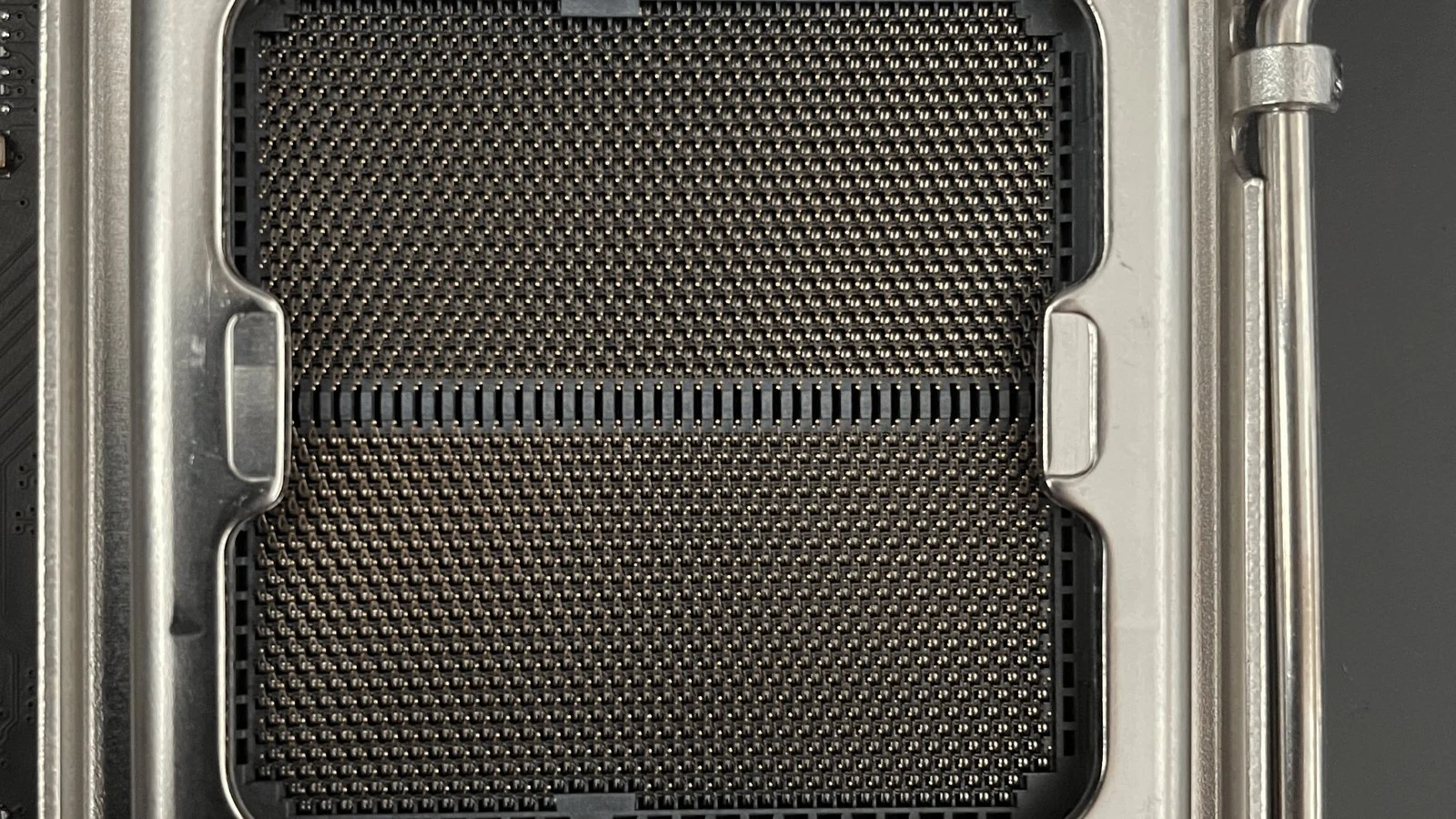
AMD has launched two new Ryzen 5 desktop chips, the 5500F and the 7500, both aimed at budget 1080p gaming CPU builds rather than anything more ambitious. The 5500F slots into the ageing AM4 platform, the 7500 into AM5, and both are six-core, twelve-thread parts rated at a 65 W TDP. Neither arrived with a keynote or a press blast; AMD simply added them to its product pages alongside the existing lineup.
What’s inside AMD’s budget 1080p gaming CPUs
The Ryzen 5 7500 is a Zen 4 chip running at 3.7 GHz base and up to 5.0 GHz boost, with 38 MB of combined cache split between 6 MB of L2 and 32 MB of L3. Those figures match the existing Ryzen 5 7500F exactly. The difference is graphics: AMD has fitted the 7500 with a small RDNA 2 iGPU carrying two Compute Units clocked up to 2.2 GHz, enough for a desktop and light browsing without a discrete card installed, though not for the 1080p gaming this chip is otherwise built for.
The Ryzen 5 5500F is a Zen 3 part clocked from 3.0 GHz base to 4.4 GHz boost, also at 65 W. Its cache is the more interesting number: 16 MB of L3, half of what AMD’s six-core Vermeer chips such as the Ryzen 5 5600 carry. That’s a real cut, not a rounding difference, and it’s the clearest sign of where this chip sits in the stack.
Why the 5500F isn’t a rebadged Ryzen 5 5500
The naming invites confusion. The existing Ryzen 5 5500 is built on Cezanne, a monolithic die with an integrated GPU, aimed at the Ryzen 5000G budget-APU family. The new 5500F uses Vermeer, AMD’s multi-chiplet Ryzen 5000 design, the same silicon family as the 5600 and 5700X. So the 5500F isn’t an iGPU-less version of the 5500; it’s a lower-binned Vermeer part, closer in lineage to the 5600 than to the chip it shares a name with. Buyers matching a board’s BIOS or cooler guidance by name alone should check the die, not just the model number.
The 5500F’s clock range, by the numbers
The 5500F’s rated range, 3.0 GHz base to 4.4 GHz boost, is a wider spread than AMD usually leaves on its Ryzen 5000 parts. By teqpost’s arithmetic, that’s a 46.7% jump from base to boost clock, well above the roughly 20 to 30% gap typical of other six-core Vermeer chips. It doesn’t change what the chip costs or how it’s built, but it does mean sustained performance will lean heavily on cooling and motherboard power delivery rather than on the rated base clock alone.
Pricing and availability
The Ryzen 5 5500F is priced at $99 and the Ryzen 5 7500 at $189, and both are available at US retailers now, according to Tom’s Hardware. At those prices, and with RAM costs climbing, the pairing is clearly meant to keep a full budget 1080p gaming CPU build affordable at the platform level, not just at the chip. That timing matters more than usual: it lands as Intel prepares another round of desktop CPU price increases in October, which will make AMD’s sub-$200 pair look better by comparison rather than worse.
Neither chip changes what’s possible at 1080p; a six-core Zen 3 or Zen 4 part with a mid-range GPU was already enough for that. What they change is the price of getting there, on platforms that still have plenty of life left in them.
Image: CristoCalis via Openverse, licensed under CC BY-SA 4.0.