
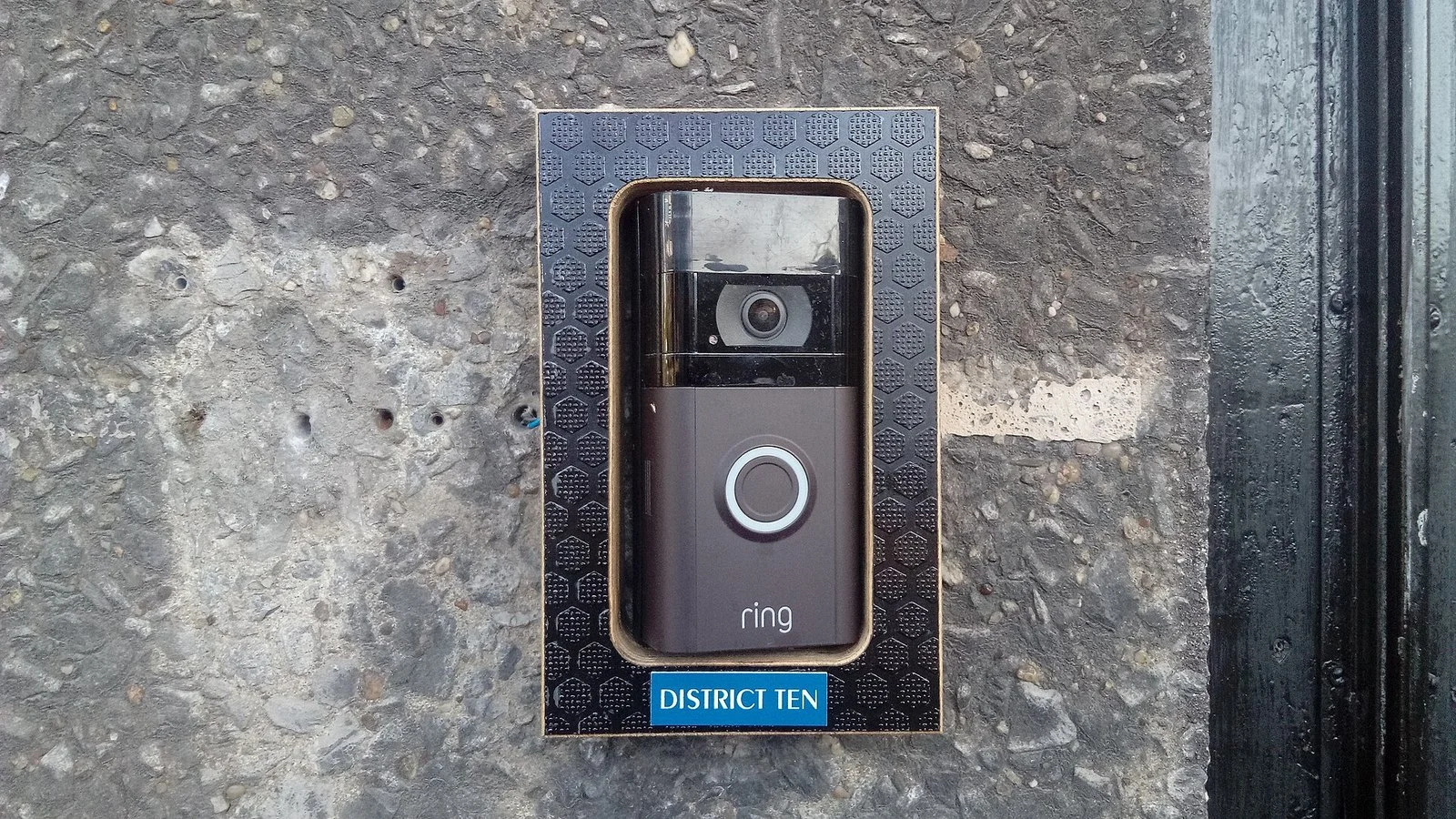
Ring has introduced a new encryption standard for its doorbells and cameras, and made it the default for every feature that runs through the company’s cloud. The Ring encryption standard now covers video that Ring’s servers process to run those cloud features, while anyone who wants the stronger guarantee of full end-to-end encryption, where Ring cannot read the footage at all, can still switch that on separately.
Defaults matter more here than a new setting buried in a menu would. Most owners never revisit the encryption options after setup, so a change to the baseline reaches every doorbell and camera already installed, not just new sign-ups. That’s also why Ring kept the stronger end-to-end option opt-in rather than forcing it on everyone: it changes what the product can do, not just how it’s protected.
What the new Ring encryption standard actually covers
End-to-end encryption on a camera or doorbell has always come with a trade-off: once footage is sealed so that only the owner can decrypt it, any feature that depends on Ring’s servers reading that footage to run cloud-based processing stops working. That’s the reason Ring kept full end-to-end encryption as something people switch on themselves rather than a universal default. The new standard sits underneath that choice rather than replacing it:
- New default: the Ring encryption standard, covering video processed for cloud features, applied automatically to every account without any setup.
- Opt-in end-to-end encryption: the stronger option where Ring’s servers cannot read footage at all, still available as a setting people switch on themselves, at the cost of any feature that needs the cloud to process video.
Why the cloud still holds your footage, briefly
Ring’s video still gets sent to the cloud under the new default. According to Engadget, that footage is processed there to power smart home controls, then deleted once the job is done. That’s the exact step full end-to-end encryption removes: with it switched on, Ring’s servers never hold a copy they can read in the first place. The new default narrows the window in which Ring’s cloud can see usable footage, rather than closing it entirely. For an owner who wants cloud features to keep working without touching a setting, that narrower window is what they now get automatically.
A default that moves the other way
The change runs in the opposite direction to a default teqpost covered a week earlier, when Comcast switched on Wi-Fi motion sensing by default on Xfinity routers, turning a home router into a sensor without any extra step from the owner. Ring’s update moves the other way: it raises the privacy floor automatically, instead of switching on a new form of data collection. Read more in teqpost’s coverage of the Xfinity motion-sensing default.
Anyone who already opted into Ring’s full end-to-end encryption isn’t affected by any of this: that setting already gave them the stronger guarantee the new standard doesn’t fully match. The change matters mainly for the much larger group of owners who never touched the encryption settings at all, and who are now covered by a stricter default than they had the day before.
Image: Donald Trung Quoc Don via Wikimedia Commons, licensed under CC BY-SA 4.0.