
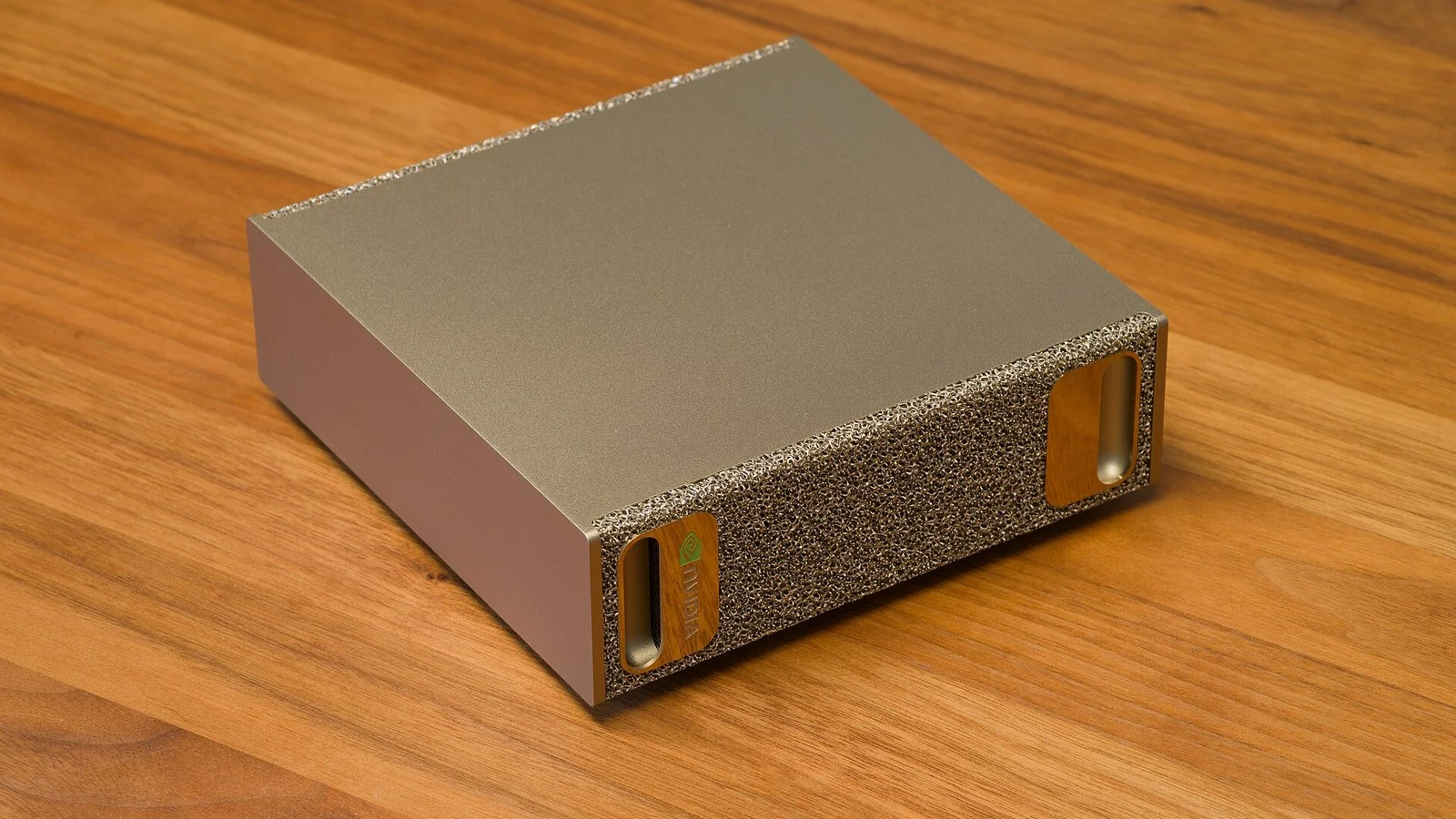
Nvidia has introduced a DGX Spark 64GB configuration, priced from $4,999 through its hardware partners, as a cheaper way into its GB10 desktop AI platform. The launch comes days after Nvidia raised the price of the existing 128GB DGX Spark to $6,950, an increase of nearly 75 percent on this time last year. Both changes trace back to the same cause: the memory shortage that has driven up the cost of LPDDR5X across the industry.
Inside the DGX Spark 64GB configuration
The 64GB Spark uses the same GB10 Superchip as the flagship, Nvidia’s unified-memory design that pairs a Grace CPU with a Blackwell GPU so the two share one pool of RAM rather than splitting it across separate buses. It ships this month from six of Nvidia’s hardware partners, a lineup The Register lists as Acer, Asus, Dell, Gigabyte, HP and MSI, the same roster that already sells the 128GB version.
GB10 was built to put large amounts of GPU memory on a desk without the five-figure price tag of a data-centre card; at launch, the 128GB Spark was technically the highest-capacity workstation GPU Nvidia sold. Halving that pool to 64GB cuts the bill of materials substantially, because the soldered memory is the single most expensive component on the board. It puts the Spark in the same compact-desktop conversation as machines like the Framework Desktop, which is chasing a similar audience of people who want serious local compute without a tower case.
Memory prices, not generosity, explain the cut
Nvidia’s GB10 line has crept upward in price since it was shown as Project Digits at CES last year. It was pitched at around $3,000 then, launched at $4,000, and the flagship has now reached $6,950. The new 64GB model undercuts that flagship by a wide margin, but at $4,999 it still costs 25 percent more than the 128GB Spark did when it first went on sale.
Nvidia is also framing the smaller Spark around what local models actually need today rather than what they needed when GB10 launched. Dense models have shrunk enough that a 128GB pool is no longer a baseline requirement: Tom’s Hardware notes that a model like Qwen3 27B now runs comfortably in 32GB, albeit with a limited context window. A chip permanently paired with memory it doesn’t need has gone from an asset to a drag on the bill of materials while LPDDR5X prices keep climbing.
Where the coverage disagrees
Nvidia’s newsroom post, The Register and Tom’s Hardware all went live within roughly a minute of each other, by teqpost’s count, which points to a coordinated announcement rather than three newsrooms arriving at the story independently. What they don’t agree on is storage: Nvidia’s own post and Tom’s Hardware put the 64GB Spark’s drive at 64GB, while The Register’s figure is 128GB. Nvidia has not published a full spec sheet for the cheaper model yet, so that discrepancy isn’t one the coverage settles on its own.
We’ve tracked this push toward dedicated local-AI hardware before, when Perplexity’s Portable Computer came to Windows on 15 September. That story was about software reaching new hardware; this one is about the hardware itself bending to a component shortage nobody designed around.
What to watch
Nvidia says the 64GB Spark ships this month. Worth checking when it does: whether the spec sheet confirms 64GB or 128GB of storage, and whether $6,950 is where the 128GB model’s price settles or memory costs push it further.
Image: Daniel Lu (User:dllu) via Wikimedia Commons, licensed under CC BY-SA 4.0.