
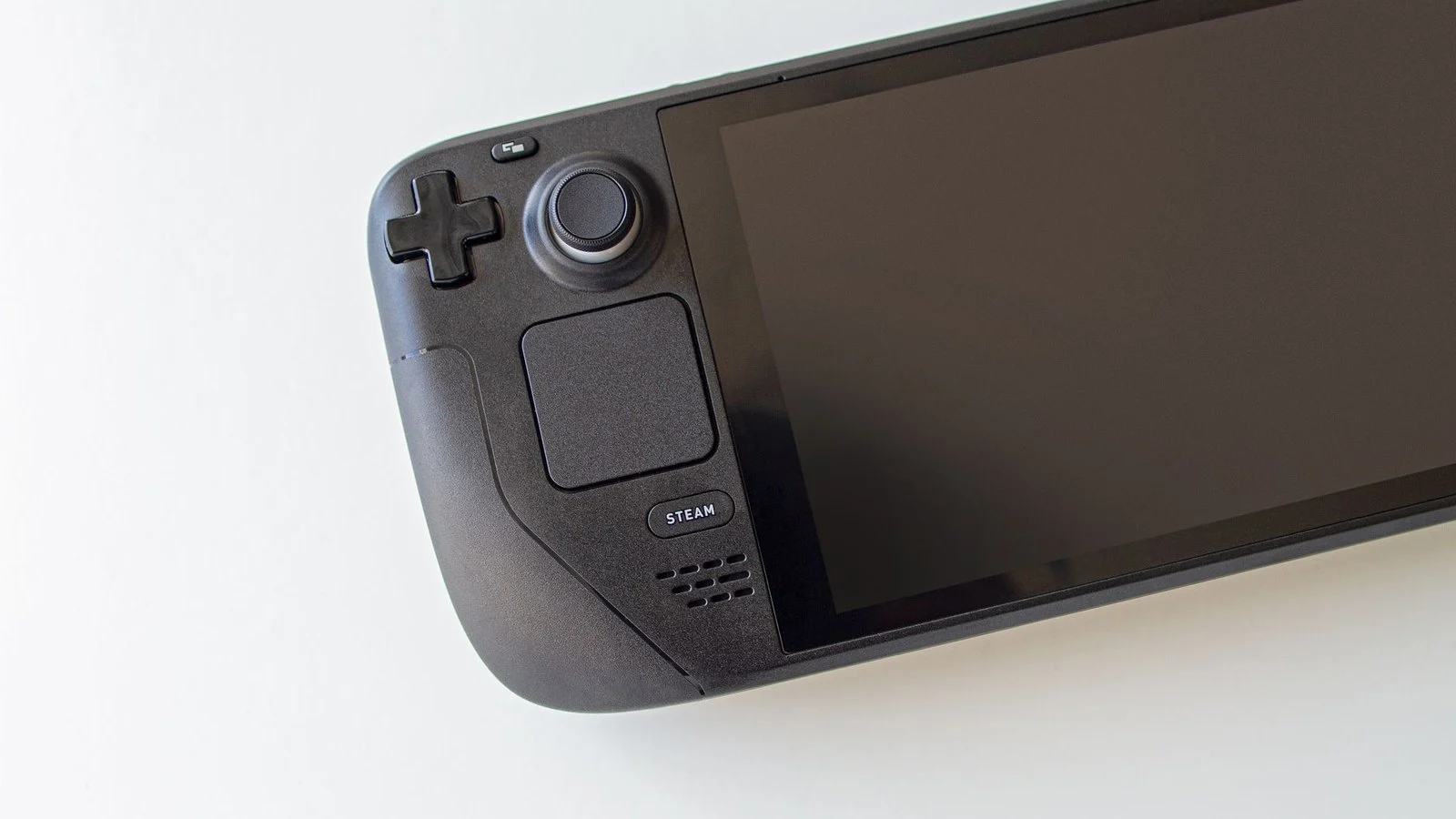
Valve says the global memory shortage that has pushed up prices across its 2026 hardware lineup has not changed its plans for a Steam Deck 2, the handheld it has been developing since the original launched in 2022.
Asked directly whether the DRAM and NAND shortage had affected development of the next handheld, Valve’s Pierre-Loup Griffais told IGN that it had not really moved the needle. The company’s position, he said, is the one it has stated before: a future Steam Deck needs a “very delineated performance improvement” over the current model before it ships. Griffais added that Valve is now mainly watching market conditions to work out how and when that jump becomes possible, rather than reworking the plan itself.
What Valve told IGN about Steam Deck 2
That framing matches what Valve has said for years: no new handheld until the generational leap is big enough to justify a price that still makes sense. It is also notably vaguer than the outcome it produced in headlines. Several outlets ran with “confirms”, “unchanged” and “on track”, language that reads as a settled commitment. Griffais’s actual wording, hedged around “not really” affected and “just a matter of looking at the current conditions”, is the language of someone watching a market, not someone announcing a fixed roadmap.
Confirmed doesn’t mean unchanged
That gap between headline and quote is worth naming, because it changes what the story actually promises. “Plans are unchanged” implies Valve has a spec locked in and is simply waiting on a calendar. What Griffais described is closer to a performance bar Valve will clear whenever silicon and memory pricing allow it, with the current shortage as one variable it is watching rather than one it has already priced in. Nothing here rules out a further delay if the shortage drags on; it only means nothing has slipped yet. Other handhelds have already closed the performance gap with the original Deck, which is part of why Valve keeps stressing a big enough jump rather than a modest refresh.
Steam Frame already carries the shortage’s cost
Valve’s other 2026 hardware makes the contrast obvious. The Steam Controller, Steam Machine and now the Steam Frame VR headset have all shipped or opened for pre-order this year, and the memory crisis has visibly touched at least one of them. Eurogamer reports the standalone Steam Frame now lists at £889 / $1,059, arriving later and more expensive than expected. Steam Deck 2 has not been through that pricing exercise yet, because it has not been announced, let alone priced. Whether it survives contact with current memory costs is a question Valve simply has not had to answer in public.
The current Steam Deck, meanwhile, keeps getting software attention that has nothing to do with the RAM market. A recent SteamOS beta added a Big Art Mode to Big Picture and the Deck UI, on top of the interface tweaks that have kept the platform moving while the hardware side stays quiet.
Valve has given no release window, and will not until it can point to that delineated jump in performance. Until then, “plans unchanged” is the most concrete thing Valve is willing to say about Steam Deck 2, and it is worth reading exactly as carefully as Griffais phrased it.