
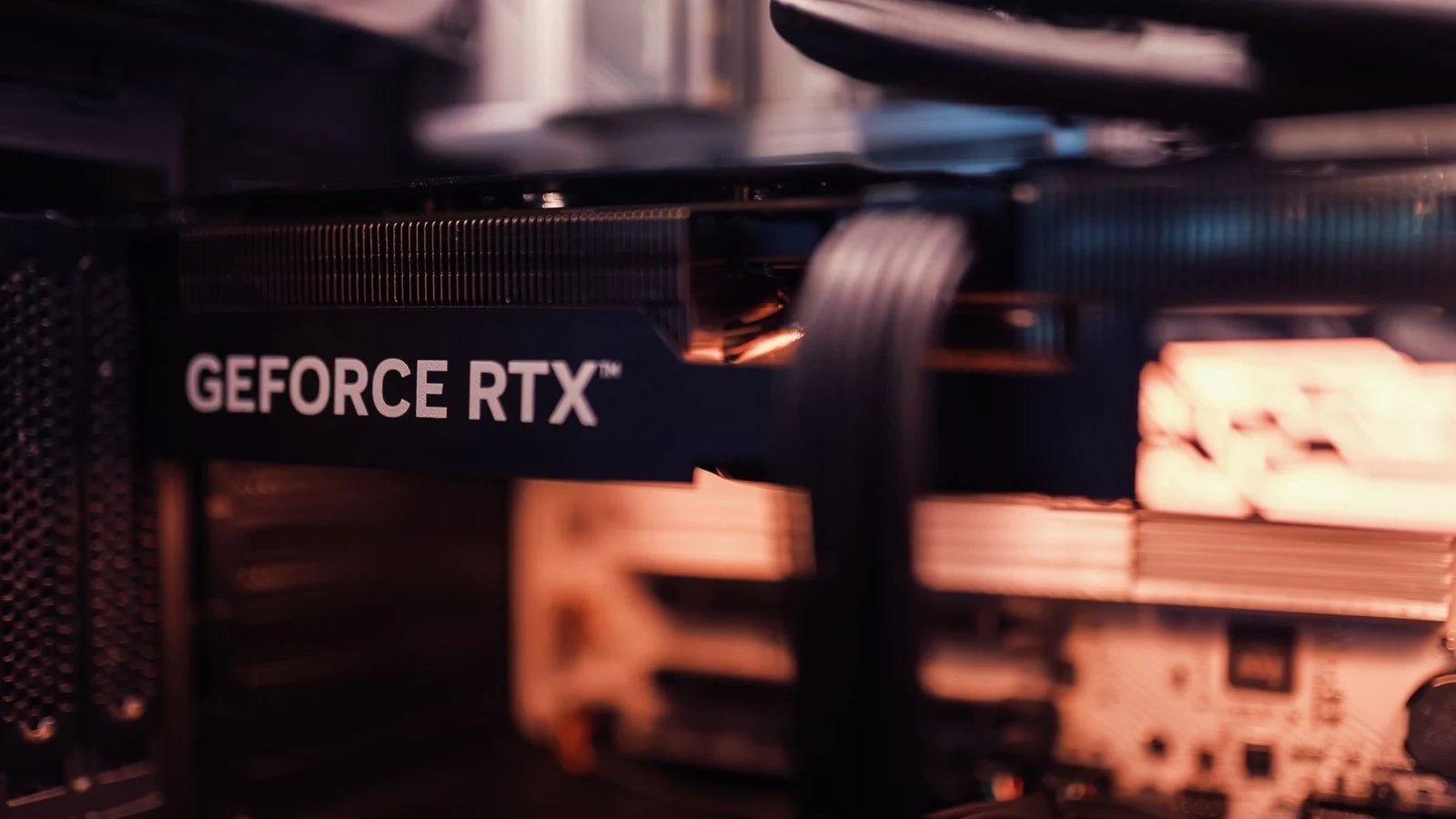
Brazilian modding channel TecLab has sidestepped the RTX 5090 melting connector problem by getting the card to run on three standard 8-pin PCIe connectors instead of Nvidia’s 16-pin 12V-2×6 design. The team stripped a Galax GeForce RTX 5090D HOF OC LAB XOC down to the bare PCB, removed both native 16-pin inputs, and soldered three 8-pin connectors directly onto the power regulators, rewiring the sense pins so the card still requests full power from the system. Galax’s HOF OC LAB XOC line is built for extreme overclockers running liquid nitrogen or phase-change cooling rather than typical gaming rigs, which made it a fitting donor board for a mod this invasive.
How modders fixed the RTX 5090 melting connector issue
The mod stays entirely at the hardware level: no BIOS flash or software power-limit tweak is involved. With the 16-pin sockets gone, TecLab rewired the sense pins so the GPU still reads full power availability, rather than the reduced state a card defaults to when it detects a partial or missing 12V-2×6 connection. Liquid cooling kept the regulators and memory within thermal limits once that safety check was bypassed.
Each 8-pin PCIe connector is rated at 150W under the ATX spec, for 450W combined across three, well under the 900W the card eventually pulled. PCIe connectors are typically built with wide safety margins above their rated figure, whereas the 16-pin 12V-2×6 connector has a documented history of running hot enough to deform at rated loads, a problem tied more to individual pins being left slightly under-seated than to the total current a high-end GPU needs to draw.
What the numbers from the livestream show
During a livestream, TecLab ramped the modified card from 400W to 900W across the three cables, pulling over 120A while holding a 3,400MHz clock, according to TechPowerUp. By our arithmetic, that’s a 125 percent increase in power draw within the same run, and the card stayed within its power and thermal limits throughout. Dropping to two connectors still allowed 66A at 3,200MHz, and a single 8-pin connector on its own sustained 65A at 3,100MHz. Every configuration reportedly passed testing without issue.
The scaling is more telling than the peak figure. A single 8-pin connector delivering 65A at a clock just 300MHz below the three-connector result suggests the card’s regulators, not the connectors, were doing most of the work of holding it stable, and that the 16-pin connector’s failures owe more to geometry and seating tolerance than to the total current an RTX 5090 needs to pull through a cable.
Why this matters for RTX 5090 owners
This isn’t a mod anyone should copy without the soldering skill and liquid-cooling setup TecLab used, and it permanently alters the PCB, voiding any warranty the card had left. But it undercuts the idea that the melting incidents reported on 12V-2×6 connectors are an unavoidable cost of moving that much power into a GPU. Other attempts to rethink GPU power delivery have run the opposite direction: a single-slot RTX 3060 that skips power connectors entirely underwhelmed in testing, for reasons unrelated to current capacity.
What to watch: whether Nvidia revises the 12V-2×6 connector’s seating tolerance for its next GPU generation, or whether board partners start offering multi 8-pin variants as a factory option rather than leaving it to modders with a soldering iron.