
China’s ChangXin Memory Technologies (CXMT) has produced its first batch of HBM3E memory chips, the fast, stacked memory that feeds data to AI accelerators, though only in small quantities so far.
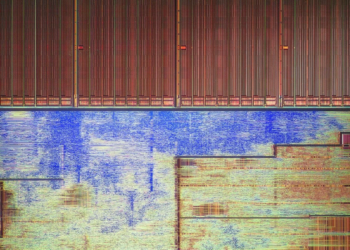
HBM3E, or High Bandwidth Memory 3E, is not ordinary DRAM. It is built by stacking multiple memory dies on top of each other and connecting them with thousands of vertical interconnects, then mounting the stack directly next to the processor die on the same package. That arrangement gives an AI accelerator far more bandwidth to shuttle data in and out than a conventional memory module sitting across the motherboard on a separate channel. Until now, China’s AI chip industry has had to source HBM3E from memory makers it does not control, which is exactly the kind of dependency Beijing’s chip self-sufficiency push has been trying to close.
Why HBM3E memory chips matter for AI hardware
Any AI accelerator, whether it is training large models or running inference at scale, is bottlenecked as much by memory bandwidth as by raw compute. HBM stacks are how chipmakers have kept up with that demand over the past several product generations. A domestic source of HBM3E memory chips means Chinese AI hardware designers can, in principle, build accelerators without relying on foreign memory suppliers for the single component most exposed to export restrictions. CXMT producing HBM3E even in small volumes is the first evidence that domestic capability has moved from research to actual output.
What CXMT’s ramp means for DRAM prices
We reported in August that DDR5 prices had climbed 416 percent over the previous year, ten times their record low, as manufacturers redirected fab capacity toward higher-margin AI memory. CXMT’s HBM3E output doesn’t reverse that. Notebookcheck notes that the new capacity is likely to be dedicated to data-centre AI memory rather than the consumer DRAM market, which means the pricing pressure we tracked in August has no obvious reason to ease. A Chinese HBM3E supplier competing for AI accelerator business doesn’t put more DDR5 modules on shelves; if anything it adds another buyer chasing the same constrained wafer capacity.
That is the split worth holding onto: CXMT’s breakthrough is genuinely useful for China’s AI hardware ambitions, and largely irrelevant to what a consumer or system builder pays for memory in the near term.
What to watch next
- Whether CXMT moves beyond small-quantity production to volume shipments.
- Whether Chinese AI accelerator makers begin qualifying CXMT’s HBM3E on their own hardware.
- Whether DDR5 pricing shows any sign of easing as AI memory capacity expands, or keeps climbing regardless.