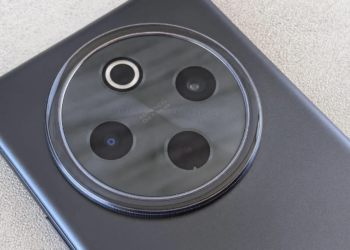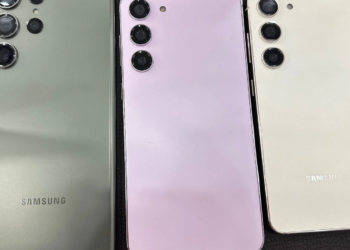

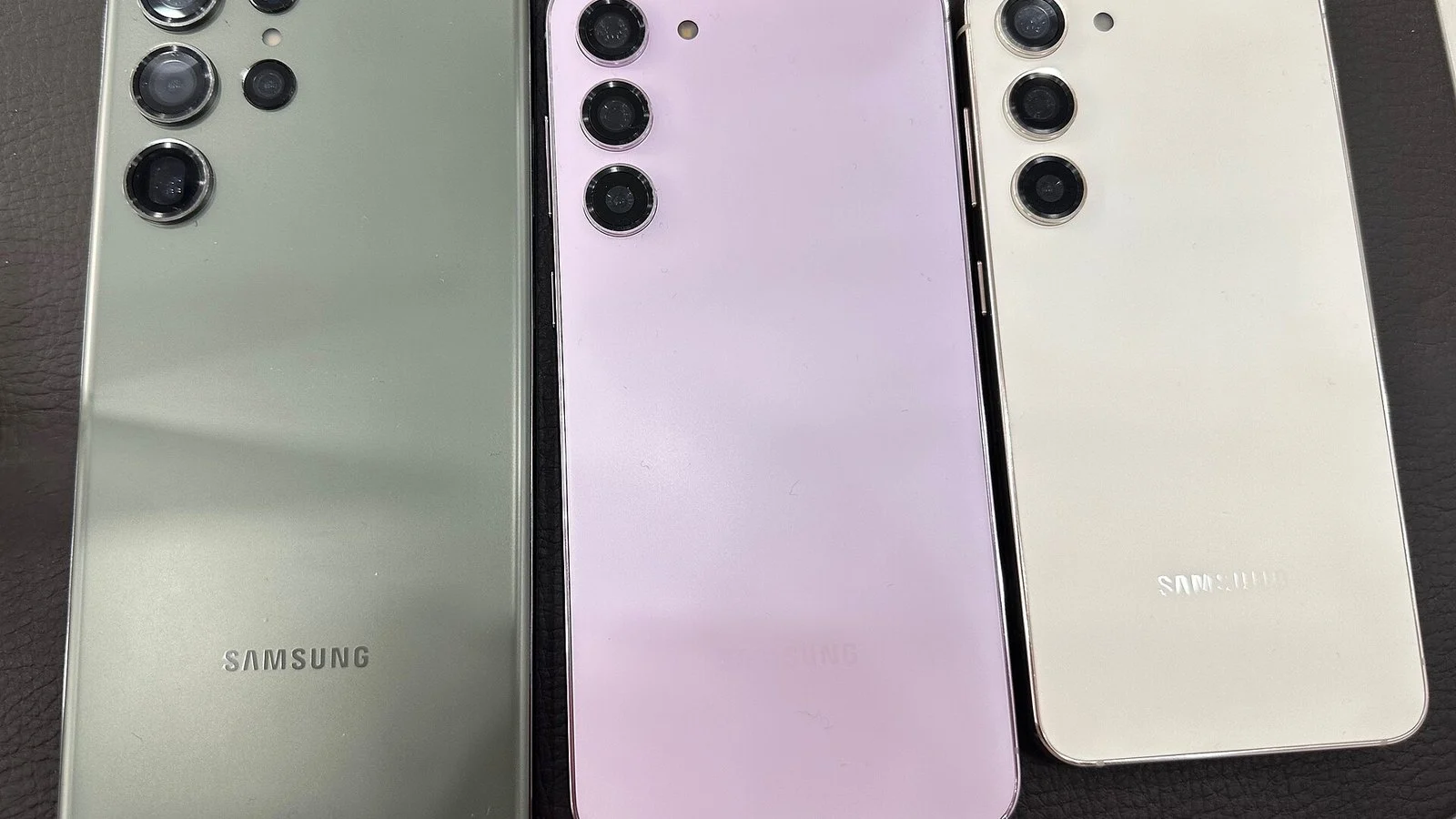
Leaked CAD-based renders confirm that the Galaxy S27 design won’t match the Galaxy S27 Ultra this year, breaking the single design language Samsung used across the whole S26 range last year. The standard Galaxy S27 keeps the S26’s oval-shaped camera bump in the top-left corner, while the Ultra and the Galaxy S27 Pro switch to a new camera plateau in place of the vertical island Samsung has used on its top-tier phones.
The Galaxy S27 design breaks from the Ultra
Renders published online put the standard Galaxy S27 at 149.75 x 71.88 x 7.25 mm, only marginally larger than the Galaxy S26 and near-identical to it in outline. Its camera housing sits in the same top-left oval bump Samsung has used for two generations running, unlike the Ultra and Pro’s new plateau.
The gap widens further down the range. A leaked render of the Galaxy S27 Pro, published by AndroidAuthority, shows it borrowing the Ultra’s camera plateau and rounder frame edges, but skipping the S Pen slot entirely and swapping the positions of the speaker grille and microphone hole. The Galaxy S27 Plus reportedly gets slightly narrower screen bezels of its own. That leaves Samsung running three distinct rear designs across four phones in one generation, just as most rivals converge on a single look per lineup.
- Galaxy S27: keeps the S26’s oval camera bump in the top-left corner.
- Galaxy S27 Plus: shares the standard model’s layout, with slightly narrower bezels.
- Galaxy S27 Pro: adopts the Ultra’s camera plateau and rounder frame, but skips the S Pen slot.
- Galaxy S27 Ultra: the only model combining the new camera plateau with S Pen support.
The change isn’t happening in a vacuum. Reviewers who’ve used Samsung’s Ultra line for four to five years have described its design as feeling repetitive from one generation to the next. A camera plateau breaks that pattern on the Ultra and Pro; the standard Galaxy S27, apparently, didn’t need the same fix.
The battery Samsung didn’t ship
Samsung reportedly tested a Galaxy S27 Ultra prototype with a 7,000 mAh battery before rejecting it in favour of a cell in the 5,700 mAh to 6,000 mAh typical-capacity range. That’s still a jump from the Galaxy S26 Ultra’s 5,000 mAh battery: by our arithmetic, moving from 5,000 mAh to a 5,700 mAh typical capacity works out to roughly a 14% increase, the largest single-generation gain the Ultra line has taken in years, even as Samsung walked away from the bigger cell.
The caution traces back to 2016, when a battery failure incident severely damaged Samsung’s reputation; the company has stayed conservative on battery capacity relative to Chinese rivals ever since. A 7,000 mAh Ultra would have closed much of that gap. A phone in the high-5,000s to low-6,000s mAh range does not.
What to watch
Two details are still unsettled. Recent tablet leaks suggest the Galaxy Tab S12 series will drop Bluetooth support from its S Pen, matching last year’s Tab S11 and recent Ultra phones, and hint that the Galaxy S27 Ultra’s own pen features could be trimmed further. Samsung hasn’t confirmed a final battery figure for the Ultra either; the 5,700 mAh to 6,000 mAh range is still a rumour, not a spec sheet.
Image: Hajoon0102 via Wikimedia Commons, licensed under CC BY-SA 4.0.