
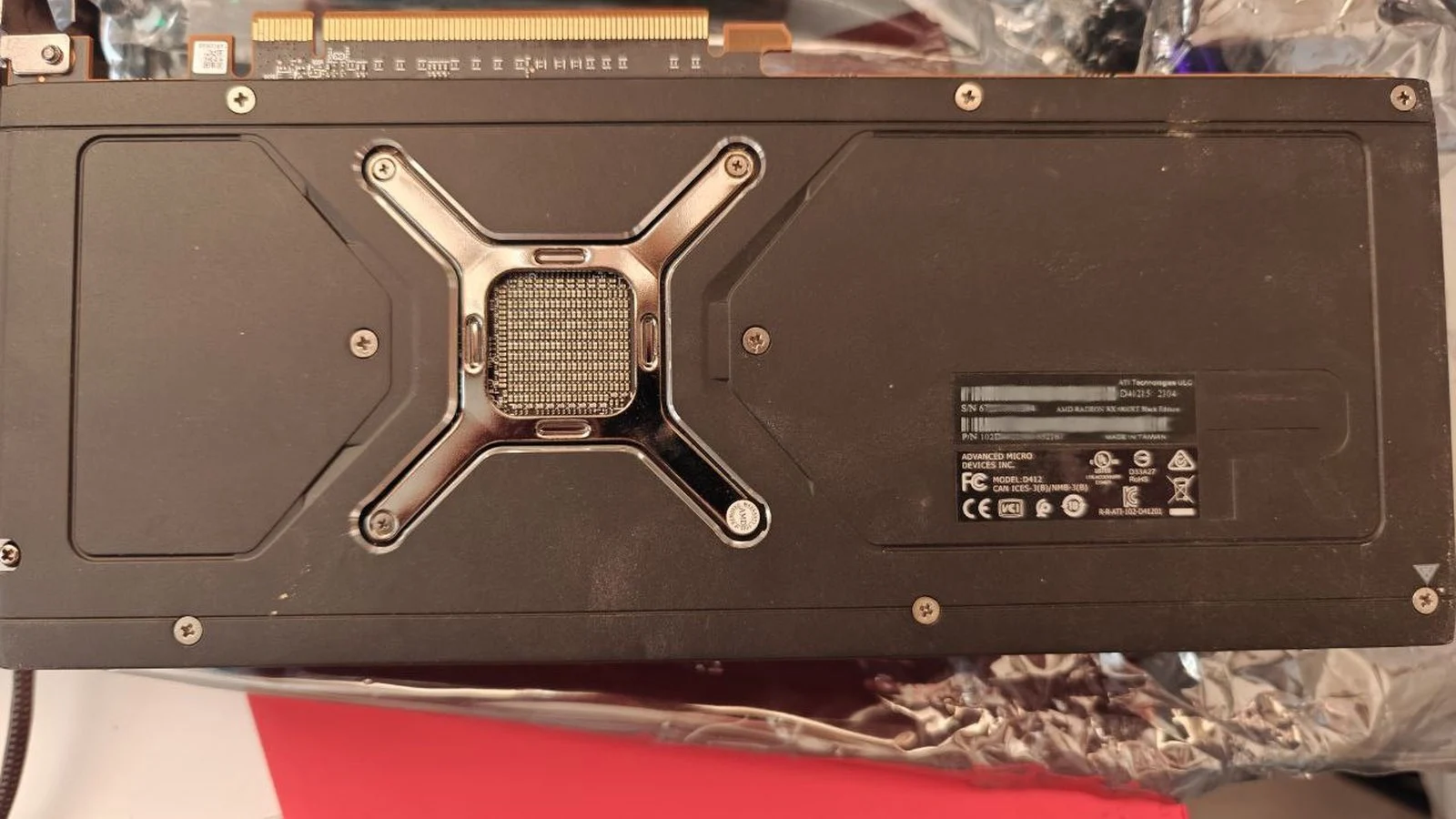
AMD released Adrenalin Edition 26.8.1 WHQL on 20 August, adding official support for the Radeon RX 9050 4GB, the entry-level RDNA 4 card that fills out the bottom of the RX 9050 line-up. The previous 26.7.1 WHQL release covered the 8GB variant; this one catches up the smaller-memory SKU, which ships pre-installed in prebuilt systems rather than sold as a standalone board.
Radeon RX 9050 4GB support arrives
The version number reflects AMD’s release cadence: 26.7.1 arrived with RX 9050 8GB support, and 26.8.1 is the first Adrenalin release of August, picking up where that one left off. WHQL certification means the driver has passed Microsoft’s compatibility testing, the baseline AMD expects before calling anything game-ready rather than beta.
The Radeon RX 9050 4GB is not sold as a retail card. It reaches buyers only inside OEM-branded desktops and laptops, which is why AMD waited a driver cycle to add it: gamers who already owned one of those machines had no proper acceleration until now. TechPowerUp reports AMD expects the entry-level RDNA 4 GPU to sell for around $279, positioning it as a basic 1080p part rather than anything aimed at high refresh rates or ray tracing.
Alongside the new hardware support, 26.8.1 adds day-one or launch-window profiles for three titles:
- Resonance: A Plague Tale Legacy
- STAR WARS Zero Company
- Call of Duty: Modern Warfare 4 open beta early access
That spread covers a narrative game, a strategy title and a shooter beta, a wider net than a single Adrenalin release usually casts.
Game support and the VRAM warning
AMD flagged one caveat specific to the 4GB card. Games such as Cyberpunk 2077 recommend a minimum of 6GB of VRAM, and running that title on a Radeon RX 9050 4GB triggers an in-game warning. AMD’s advice is blunt: set graphics-intensive features to low, or turn them off. By our arithmetic, that 6GB recommendation is 50 percent higher than the memory the card actually carries, which is a wide enough gap that turning settings down is not really optional guidance, it is the only way the card runs a modern title without stuttering or texture pop-in.
That is the trade-off buyers of OEM systems with this GPU are making: a modern RDNA 4 feature set and instruction support current games expect, paired with a frame buffer that falls short of what several current titles ask for. Lowering settings is a workaround, not a fix, and it will stay the standard advice for as long as the 4GB card remains in circulation.
What to watch next
AMD has not said whether the Radeon RX 9050 4GB will move beyond OEM exclusivity into retail channels. Given that the 8GB variant already ships as a standalone board, a cheaper 4GB retail SKU is plausible, but nothing in this release confirms it. The next driver cycle should show whether AMD narrows the VRAM warning into guidance for specific settings, rather than a blanket recommendation to turn everything down.
Image: Vitaly Zdanevich via Wikimedia Commons, licensed under CC BY-SA 4.0.