
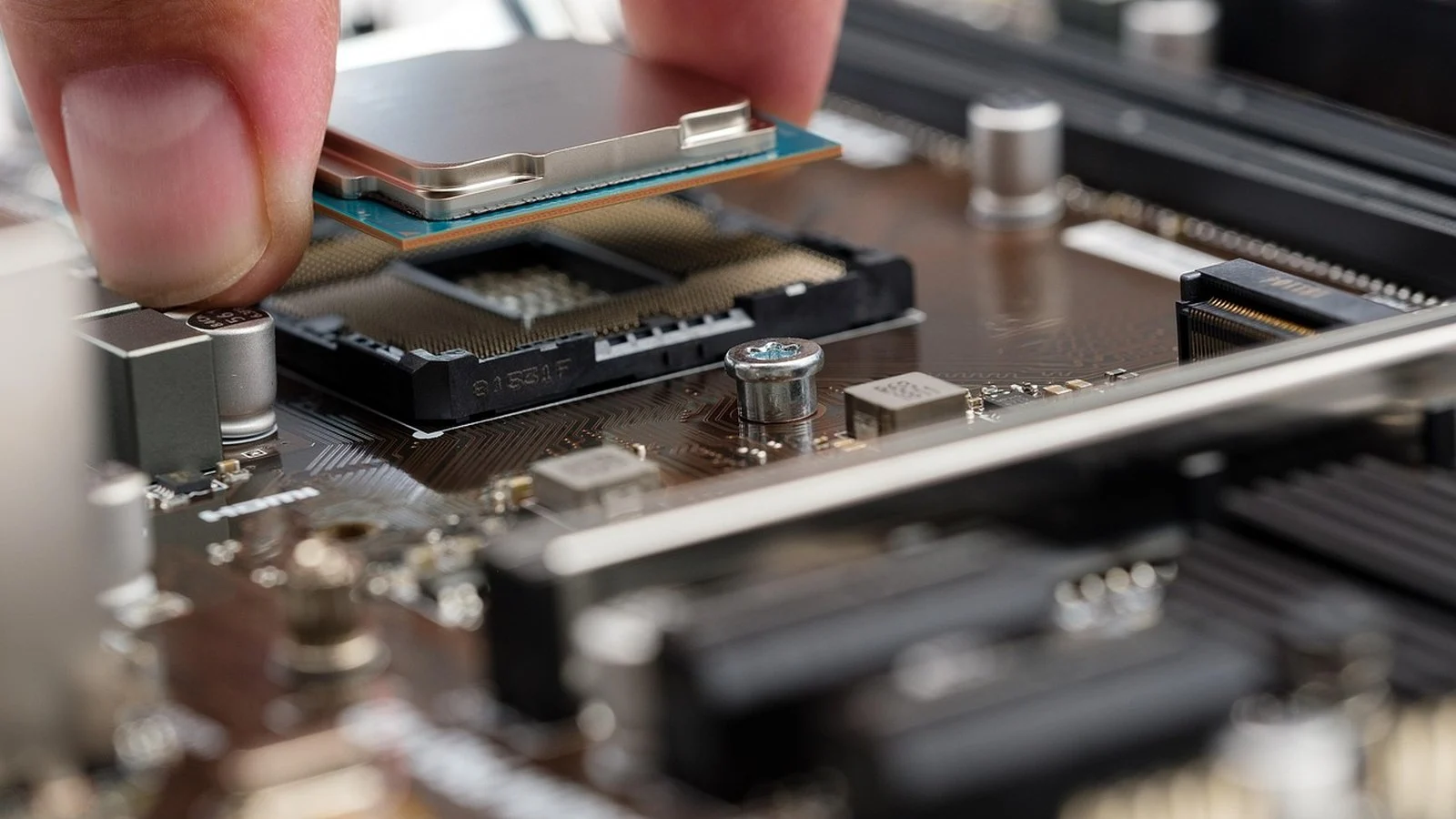
A leaked CPU-Z submission has outed an unreleased Intel desktop processor as the Core Ultra 9 4950K, and the name itself is the story: after Arrow Lake’s three-digit model numbers, Intel’s next desktop generation looks set to jump back to a four-digit format. The chip is believed to belong to the Nova Lake-S family and was tested on an unannounced Z990 motherboard using a new LGA-1954 socket, meaning existing boards will not support it.
What the Core Ultra 9 4950K leak shows
The listing describes a 28-core layout: eight “Coyote Cove” P-cores, 16 “Arctic Wolf” E-cores and four low-power E-cores, a three-tier mix Intel already uses on some mobile chips but has not brought to the desktop at this scale before. The LP E-cores exist to handle background and idle-system work at minimal power while the P-cores and regular E-cores stay parked, and putting them on a 28-core enthusiast chip is a departure from how Intel has built desktop silicon until now.
In CPU-Z’s own ranking database, the sample reportedly scored over 1,000 points in the single-core test and more than 20,000 in the multicore test, according to TechPowerUp. Those are leaderboard numbers from one unreleased engineering sample submitted by an unknown tester, not an Intel-sanctioned benchmark, so they confirm the chip exists rather than how it will perform at launch. Overclock3D separately reports the part as an Intel 18A processor, tested on the unreleased Z990 chipset rather than any board currently on sale.
Intel’s naming scheme keeps shifting
Arrow Lake, Intel’s current desktop line, uses three-digit model numbers under the Core Ultra badge. If the 4950K designation holds, Nova Lake-S would change that naming scheme again after only one generation. Guru3D notes the leak points to these arriving as “Core Ultra Series 4” desktop chips, meaning the generation number and the model-number format would both shift at once, though nothing about that branding is confirmed either. For buyers, the naming logic they just learned to parse with Arrow Lake will not carry over to whatever replaces it, and there is no indication yet whether four digits apply across the whole Nova Lake-S stack or just to flagship K-series parts like this one.
A three-tier core design meets a changing scheduler
The low-power E-core is not exclusive to Intel. AMD is adding an equivalent core type for its Zen 6 client chips, and the Linux kernel work to recognise it landed in version 7.3, alongside patches that unify how the scheduler classifies Intel’s and AMD’s core types more generally, as teqpost covered in its Linux 7.3 scheduler update piece. That matters for a chip like Nova Lake-S because a three-tier P-core, E-core and low-power E-core hierarchy only pays off if the operating system correctly identifies which type a thread should land on. Get that wrong and the low-power cores either sit idle or get handed work heavy enough to erase the power saving they exist for.
What to watch next
None of this is confirmed. Intel has not announced Nova Lake-S, acknowledged the Core Ultra 9 4950K name, or given a launch window for Core Ultra Series 4 desktop chips. Worth watching: whether further CPU-Z or benchmark leaks turn up on the same Z990 platform, whether the four-digit naming shows up on lower-tier Nova Lake-S parts and not just this flagship sample, and whether Intel says anything official before more of the lineup leaks out on its own.
Image: Raimond Spekking via Wikimedia Commons, licensed under CC BY-SA 4.0.