
The Linux 7.3 merge window has pulled in a set of scheduler changes that lower scheduling latency, add better support for asymmetric CPU designs such as Intel’s P-core and E-core mix, and are already producing measurable frame rate gains in independent testing.
The Linux 7.3 scheduler update is one of the more consequential merges for anyone running a hybrid Intel chip or an older, lower-power gaming rig, since the changes target exactly the kind of scheduling decisions that determine whether a game’s frame pacing feels smooth or stutters under load.
What the Linux 7.3 scheduler changes fix
Hybrid CPU designs split cores into two classes with different performance and power characteristics, and a scheduler that treats them as interchangeable will happily park a latency-sensitive game thread on a slower efficiency core while a background task hogs a performance core. The Linux 7.3 scheduler work addresses that by improving how the kernel identifies and prioritises work on asymmetric core layouts, alongside general reductions in scheduling latency that apply regardless of CPU type. The practical effect for anyone running a game is fewer stalls waiting for the scheduler to place a thread correctly, which shows up as steadier frame times rather than a single big FPS number.
TechPowerUp’s benchmark: minimum FPS up 7.25x
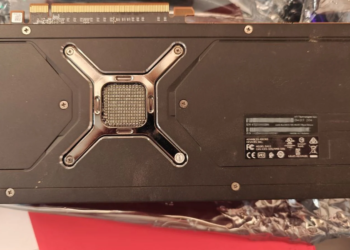
The clearest illustration of that effect comes from TechPowerUp, which ran Shadows Awakening through GOG and GE-Proton 10-34 on an Intel Core i7-2600K paired with an AMD Radeon RX 580, a combination that’s over a decade old on the CPU side and squarely the kind of low-power hardware the scheduler changes are meant to help. Average frame rates improved by 25%, average frame times were 50% better, and minimum FPS rose from 4.0 to 29.0, a 7.25x increase. Those are exactly the numbers that matter for perceived smoothness: a high average framerate with a low 1% or 0.1% low still feels rough, and it’s the low end that the scheduler changes moved the most.
Btrfs and EXT4 also land work in the same window
The 7.3 merge window isn’t only about the scheduler. A separate Btrfs feature pull, sent in by SUSE’s David Sterba, adds further performance work with gains cited at roughly three to five times in some workloads, and a main EXT4 pull request has landed with its own optimisations on top of earlier IOmap-related improvements. None of that touches the scheduler directly, but it’s a reminder that 7.3 is a broadly performance-focused release rather than one built around a single change.
Why the benchmark took a day to show up
By our arithmetic, the first scheduler coverage landed roughly 14.6 hours before the benchmark numbers did. That gap tracks the usual path this kind of change takes: the merge itself gets reported as soon as it lands in the kernel tree, and it takes someone actually building and running a game against it to turn lower scheduling latency into a number a reader can judge against their own hardware. The i7-2600K and RX 580 rig used for the benchmark is a useful stand-in for exactly the ageing, low-power systems the change targets, rather than a synthetic best case.
The 7.3 merge window is still open, so further pulls covering other subsystems are still due before it closes and the release candidate cycle begins.